
 Cart
Cart
 Imagine you’re running a busy school building, and without realizing it, your ventilation has drifted low. Over time, pollutants and stale air start to build up, leading to headaches, fatigue, and concentration problems — the classic signs of Sick Building Syndrome that quietly erode student performance and teacher well-being.
What happens when a healthcare facility brings in far more outside air than needed because its airflow readings are off? Energy consumption spikes as the HVAC system struggles to condition unnecessary outdoor air, sometimes wasting 10–20% more energy — an enormous hit to an already tight facility budget.
Imagine a commercial building where ventilation isn’t removing moisture effectively. Humidity accumulates in corners and behind walls, creating perfect conditions for mold to grow — damaging equipment, degrading air quality, and increasing maintenance costs before anyone even knows there’s a problem.
These real-world scenarios can happen to any facility, any time. When it comes to creating healthier, more efficient buildings, airflow is one of those invisible factors that quietly determines how well everything else works. The right amount of outdoor air can improve indoor air quality, support occupant comfort, and even boost cognitive performance. The wrong amount can waste energy, increase operational costs, and make a building feel… well, off.
Yet for many facility teams, getting airflow right is harder than it sounds. And it’s not because people aren’t trying — but rather, it’s often because the tools available to them make accuracy difficult, inconsistent, or time-consuming.
Let’s take a look at some of the challenges facility managers, engineers, and building owners face when airflow measurement isn’t working as it should.
The Quiet Problems That Come From Inaccurate Airflow Measurement
1. You may be “over-ventilating” without realizing it.
Most buildings default to bringing in more outside air than they actually need. It feels safer, and many assume it leads to better indoor air quality. But the reality is more complicated.
Bringing in excess outside air — especially in climates with extreme heat or cold — quickly drives up energy use. According to EPA findings cited in K-12 and healthcare studies, raising outside air from 5 CFM to 20 CFM per person can increase energy consumption by 10–20%.
That’s a big hit for any facility’s budget.
2. Conversely, you may not be ventilating enough.
Under-ventilation can lead to poor indoor air quality, which affects comfort, occupant health, and performance. One study in education environments found that improving IAQ can boost student productivity and cognitive performance by up to 8–11%.
When airflow measurement tools drift, clog, or misread due to environmental conditions, you often don’t know you have a problem until someone starts complaining.
3. Some measurement technologies simply aren’t suited for real-world conditions.
Many airflow devices depend on conditions that are rarely—if ever—perfect inside an HVAC system. Turbulence, debris, humidity, duct geometry, and weather can all interfere. Technologies like pitot tubes or thermal dispersion often struggle when velocities are low or air pathways are irregular.
In mixed-air environments (like packaged units or air handlers with dampers), readings can vary wildly depending on where sensors are placed.
4. Maintenance becomes a hidden cost.
Some systems need routine cleaning or recalibration to maintain accuracy. In busy facilities — schools, hospitals, warehouses — this often doesn’t happen on schedule. As dirt, dust, and moisture accumulate, performance degrades.
Eventually you’re left with airflow measurements that look precise… but aren’t close to accurate.
What You Can Do — With or Without a New Product
Even if you’re not ready to adopt a new airflow measurement system, there are practical steps you can take to improve accuracy and ensure better building performance:
✔ Audit your outside air strategy annually.
Check whether ventilation setpoints match the current occupancy needs and any updated codes or guidelines. Many facilities ventilate to outdated assumptions.
✔ Compare your airflow trends against energy bills.
Sudden increases in energy use could point to ventilation drift or measurement errors.
✔ Make sure sensors are placed where readings are stable.
Avoid areas near bends, dampers, or abrupt changes in duct geometry. If you must place sensors there, expect more maintenance.
✔ Prioritize technologies that fit your environment.
If your system frequently deals with pollutants, moisture, or inconsistent airflow patterns, choose tools known to be resilient in those conditions.
✔ Leverage building automation when possible.
Even basic BAS features can help monitor ventilation patterns, flag unexpected changes, or reveal when equipment isn’t behaving as expected.
These practices can improve accuracy and reliability no matter what equipment you use — and they’re a great foundation for healthier, more comfortable buildings.
 When It Might Be Time to Consider a Different Approach

If airflow remains a recurring pain point — whether due to maintenance frustration, unreliable readings, or energy costs that never seem to level out — it may be worth exploring a system designed specifically to handle real-world variables.
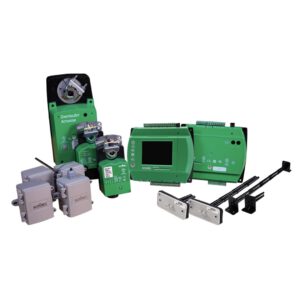
That’s where the KMC Airflow Measurement System (AFMS) comes in.
Built to align with ASHRAE Standard 111 and engineered to remain accurate even in the presence of rain, dust, pollen, or complex duct geometry, KMC AFMS avoids many of the pitfalls that make conventional airflow tools struggle. It delivers repeatable airflow data for outside, return, and supply air without requiring frequent recalibration.
For schools, it supports better IAQ and student outcomes. For healthcare, it helps maintain accurate air changes per hour (ACH) in critical environments. For commercial buildings, it reduces unnecessary energy spend while improving comfort.
And while no single product is right for every situation, KMC AFMS exists because many facilities were wrestling with the same issues — and needed a more dependable option.
The Bottom Line
Good airflow measurement isn’t about chasing perfection — it’s about giving your building the information it needs to operate safely, efficiently, and intelligently.
Whether you continue optimizing your current system or explore newer solutions like the KMC AFMS, focusing on accurate airflow measurement will pay dividends in occupant health, building performance, and budget stability.
If you’re curious how KMC AFMS might work in your environment, you can learn more here:
👉Airflow Measurement
And of course, our team is always happy to help you compare options, troubleshoot challenges, or simply share best practices.
All data cited referenced in KMC Controls field literature.